Custom Molded Rubber Parts With Tooling and Material Review
Move from drawing or sample to molded rubber production with engineering review, tooling discussion, molding and inspection support.
INCOMPLETE — image: Custom rubber parts product group for drawing-based OEM projects · Original source: https://asenpower.com/wp-content/uploads/2026/07/asn-product-custom-rubber-parts-1.webp
Custom Molded Rubber Parts: Product / Solution Explanation
This page is for molded parts where compression molding, tooling structure, material choice and finishing affect project risk.
Send Drawing or Sample
Geometry, dimensions and visible application details help confirm manufacturing feasibility.
Share Working Conditions
Temperature, media, pressure, movement and environment guide material direction.
Confirm Quantity Range
Prototype, low volume and mass production affect tooling and quotation planning.
Manufacturing Evidence
Every step follows a practical production sequence: drawing review, material selection, molding and inspection before packing.
INCOMPLETE — image: Engineering review workspace for drawing and material evaluation · Original source: https://asenpower.com/wp-content/uploads/2026/07/asn-engineering-review-1.webp
Drawing Review
Confirm geometry, tolerances and application requirements before quotation.
INCOMPLETE — image: Rubber mixing process supporting material consistency before molding · Original source: https://asenpower.com/wp-content/uploads/2026/07/asn-home-rubber-mixing-2-1.jpg
Material Selection
Review rubber or PTFE direction against temperature, media, movement and sealing risk.
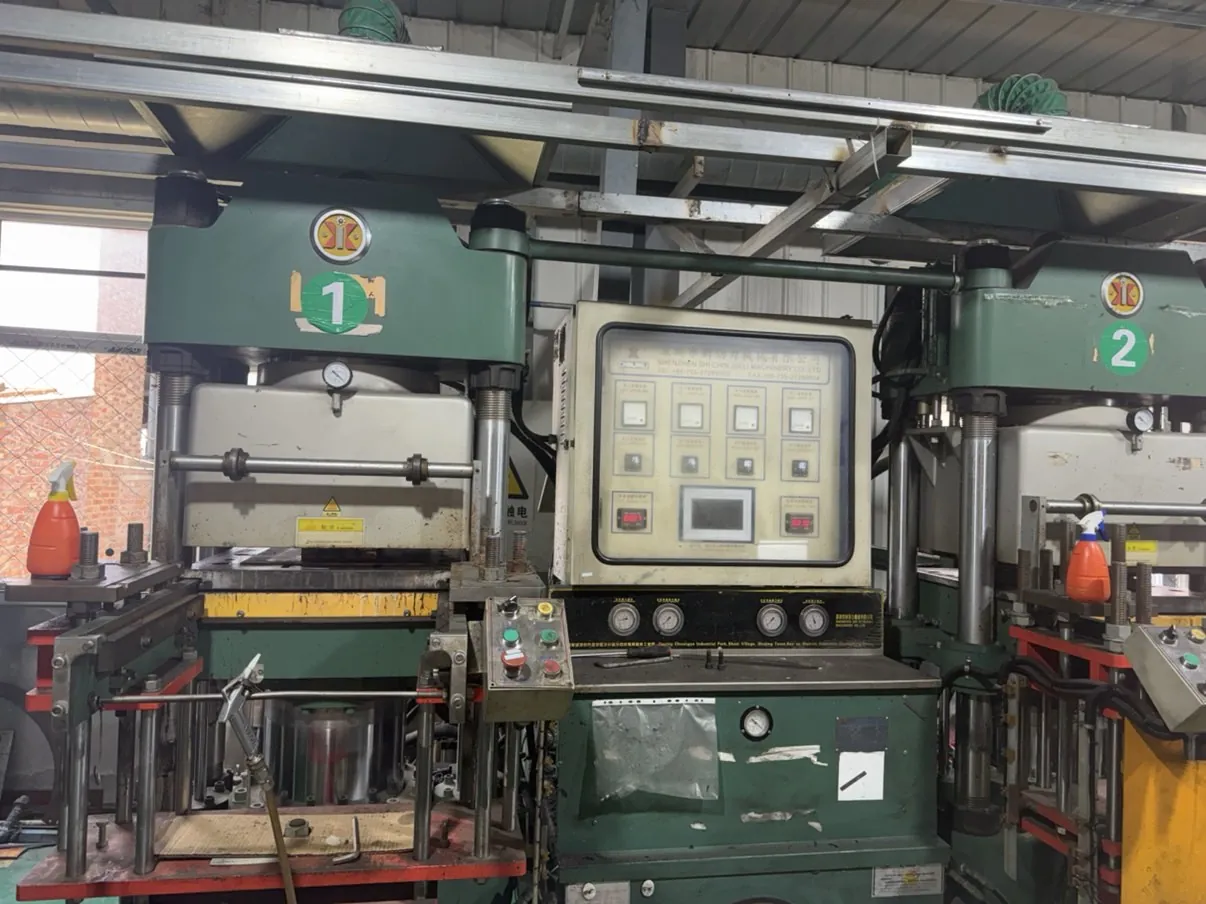
Manufacturing Route
Connect tooling, molding, finishing and quantity planning to the actual part.
INCOMPLETE — image: Quality inspection of custom rubber parts before shipment · Original source: https://asenpower.com/wp-content/uploads/2026/07/asn-home-inspection-3.jpg
Inspection Before Shipment
Reduce buyer risk through dimensional, visual and packing review.
Video Asset
INCOMPLETE — video / media unavailable locally. Original source: https://asenpower.com/wp-content/uploads/2026/07/asenpower-home-manufacturing-line.mp4?_=1
INCOMPLETE — video / media unavailable locally. Original source: https://asenpower.com/wp-content/uploads/2026/07/asenpower-home-manufacturing-line.mp4
Material / Application Review
NBR
Review this direction against the drawing, working condition and production route.
FKM
Review this direction against the drawing, working condition and production route.
EPDM
Review this direction against the drawing, working condition and production route.
Silicone
Review this direction against the drawing, working condition and production route.
HNBR
Review this direction against the drawing, working condition and production route.
Molded seals
Application fit should be checked before quotation and production planning.
Protective rubber parts
Application fit should be checked before quotation and production planning.
Equipment pads
Application fit should be checked before quotation and production planning.
Custom industrial components
Application fit should be checked before quotation and production planning.
What Information Helps Us Quote Faster?
Drawing / CAD Files
Upload drawings, CAD files or sample photos to confirm geometry and dimensions.
Material Requirement
Share required material or working conditions for material review.
Application Environment
Tell us temperature, media, pressure, movement or sealing conditions.
Annual Quantity
Share prototype, low-volume or mass-production quantity for quotation planning.
Custom Molded Rubber Parts FAQ
Can ASENPOWER quote from drawings?
Yes. Upload drawings, CAD files, samples or photos so engineering can review geometry, material and production feasibility.
What information helps quotation?
Drawing files, material requirement, application environment and annual quantity help the team quote faster.
Can material be recommended?
Material direction can be reviewed based on oil, temperature, weather, chemicals, pressure, movement and sealing conditions.
Is small batch production possible?
Prototype, low-volume and mass-production requirements can be reviewed during RFQ.
How is quality checked?
Inspection depends on drawing, appearance, dimensions, material and packing requirements agreed before production.
Can overseas buyers request export support?
ASENPOWER is the export brand of KLS Rubber, our custom rubber parts factory in Beichen District, Tianjin, with 30 years of experience, 4 vulcanizing presses and in-house molds.
OEM Molded Rubber Parts Made to Your Drawing
ASENPOWER supports overseas OEM buyers who need custom molded rubber parts produced from a drawing or an approved sample. Production is carried out by ASENPOWER at its factory in Beichen District, Tianjin, China, backed by 30 years of rubber manufacturing. The factory connects compound preparation, tooling, molding, finishing and inspection to the approved drawing and application requirements.
Our compression molding route is the usual starting point for molded rubber parts. Transfer and injection molding are also reviewed when geometry, inserts or quantity call for them. We review the route before quotation, so you know what the tooling, material and inspection plan will look like before you commit.
Drawing-led
Quotation starts from your 2D drawing, 3D file or sample.
Prototype to mass production
Prototype, low-volume and mass-production quantities are reviewed in the same RFQ.
Custom tooling
Molds are made in-house. Tooling and sample development are agreed with you before production starts.
ISO 9001 quality management system
Production and inspection run under an ISO 9001 quality management system.
Molding Processes for Custom Rubber Parts
The right process depends on part geometry, material behavior, tooling requirements and expected volume. We confirm the route during drawing review.
| Process | Suitable for | Buyer benefit |
|---|---|---|
| Compression molding | Large or complex molded rubber parts, medium production volume, broad material options | Flexible tooling and compound choices for drawing-based molded components |
| Transfer molding | Intricate components, inserts and projects needing controlled cavity filling | Supports selected insert and detailed geometry requirements after feasibility review |
| Injection molding | Complex geometry and repeat production where controlled cycle planning is appropriate | Efficient repeat production after tooling and process validation |
Learn more in our compression molding guide.
Precision Molded Rubber Parts: How We Approach Tolerances
Rubber is elastic and temperature-sensitive, and shrinkage, hardness, compound and post-processing all affect final dimensions. For precision molded rubber parts we therefore recommend defining tolerances around function, not applying one tight number to every dimension.
- Mark critical dimensions on the drawing – sealing surfaces, assembly holes, mating interfaces.
- Let non-critical dimensions be wider – over-tight tolerances raise tooling cost, inspection time and rejection risk without improving function.
- Review geometry early – thin lips, deep ribs, undercuts and thick-to-thin transitions affect dimensional stability, as do parting line and flash position.
- Agree an approved sample so buyer and supplier inspect to the same expectation.
Full guidance: custom rubber part tolerances for OEM buyers.
Tolerances are per drawing; critical dimensions are agreed at sample stage.
Materials for OEM Molded Rubber Parts
Material direction follows media, temperature, pressure, movement and environment. The final grade and hardness are confirmed per project against your drawing and working conditions.
NBR
Commonly reviewed for oil and fuel contact.
FKM
Commonly reviewed for heat and chemical exposure.
EPDM
Commonly reviewed for weather, water and steam exposure.
Silicone
Commonly reviewed for wide temperature range. Whether compliance tests can be arranged, and their scope, is confirmed per RFQ.
HNBR
Commonly reviewed where oil resistance meets higher heat or mechanical demand.
Other rubber & silicone materials
Other common rubber and silicone materials can be reviewed per project.
See all options on our rubber materials page. Directional notes above are not a guarantee of suitability; the final choice is confirmed per project.
From RFQ to Mass Production: Six Stages
- RFQ & drawing review – drawings, tolerances, application conditions, quantities, required documents.
- DFM & feasibility – geometry, material direction, tooling, parting line and process route.
- Tooling & sample development – samples for dimensional and functional approval.
- Trial production & validation – process parameters, dimensions, appearance, project-specific tests.
- Mass production – controlled repeat production with documented process and inspection points.
- Inspection, packing & delivery – final checks, project-specific packaging, shipment preparation.
For the buyer-side checklist, read how to source custom molded rubber parts.
Capability Snapshot
| Item | Detail |
|---|---|
| Production base | Beichen District, Tianjin, China |
| Rubber manufacturing experience | 30 years |
| Molding equipment | 4 vulcanizing (molding) presses |
| Quality system | ISO 9001 quality management system |
| Tooling | Molds made in-house |
| Mold ownership | If the customer pays the mold fee, the mold belongs to the customer (agreed per project) |
| Materials | Common rubber and silicone materials (e.g. NBR, FKM, EPDM, silicone, HNBR) |
| MOQ | Flexible MOQ, quoted per part |
| Tolerances | Per drawing; critical dimensions agreed at sample stage |
| Export markets | Japan, South Korea, Southeast Asia, Europe |
| Trade terms | FOB or EXW |
| Quotation | Quote within 24 hours |
OEM Molded Rubber Parts – Frequently Asked Questions
Who manufactures the parts, and what does ASENPOWER do?
Parts are produced by ASENPOWER. ASENPOWER handles RFQ communication, drawing and engineering review coordination, packaging coordination and export project support for overseas OEM buyers.
Which molding process will my part use – compression, transfer or injection?
It depends on geometry, material, tooling and volume. Compression molding suits large or complex parts at medium volume with broad material choice; transfer molding suits intricate parts and inserts; injection molding suits complex geometry and repeat production once tooling and process are validated. We recommend the route during drawing review, before you commit to tooling.
What tolerances can you hold on molded rubber parts?
Achievable tolerance depends on the compound, hardness, geometry and tooling, so we review each drawing individually. Mark critical dimensions on your drawing and we will tell you what is realistic and what would raise cost. Tolerances are per drawing, with critical dimensions agreed at sample stage. See our tolerance guide.
What files and information should I send for an RFQ?
A 2D drawing (PDF, DWG or DXF) with critical dimensions marked, a 3D model (STEP or IGES) if available, material and hardness target, operating media and temperature, annual quantity and sampling needs. Our quote form accepts PDF, DWG, DXF, STEP and ZIP files up to 2 MB.
I only have a sample and no drawing. Can you still quote?
Yes. A sample can support geometry and material discussion when drawings are incomplete. Tell us in the RFQ, and we will review the sample and agree the drawing with you before tooling.
Who owns the mold, and what is the MOQ?
Molds are made in-house. If the customer pays the mold fee, the mold belongs to the customer; this is agreed per project. MOQ is flexible and quoted per part.
Send your drawing — quote within 24 hours
Upload your drawing, CAD file or sample photos with material, quantity and application conditions. Our engineers review feasibility before quoting.
Send your drawing — get a quoteAccepted files: PDF, DWG, DXF, STEP, ZIP (up to 2 MB). Trade terms: FOB or EXW.
Related reading
Have a Drawing? Let Our Engineers Review Your Project.
Send drawings, samples or application requirements for material and manufacturing review.
Project preparation
From Molding Route to a Quoteable Project
Use the manufacturing pages and buyer tools below to confirm the likely process direction, prepare the drawing package and start an engineering review.
Need Custom Rubber Components?
Send us your drawings, specifications or project requirements for engineering review.
Bonding or overmold shown in a drawing may be evaluated per project; it is not a confirmed standard capability.